 Home
Home App Features
 About
About Contact Us
 Legal Compliance
 Food Safety
 News
News Certifications
 Start Up Food
 Business-Type-What am I into ?
 How to Become
 Resource


Welcome
Register with Food safety regulatory compliance


How to determine the shelf life of a ready-to-eat-food?
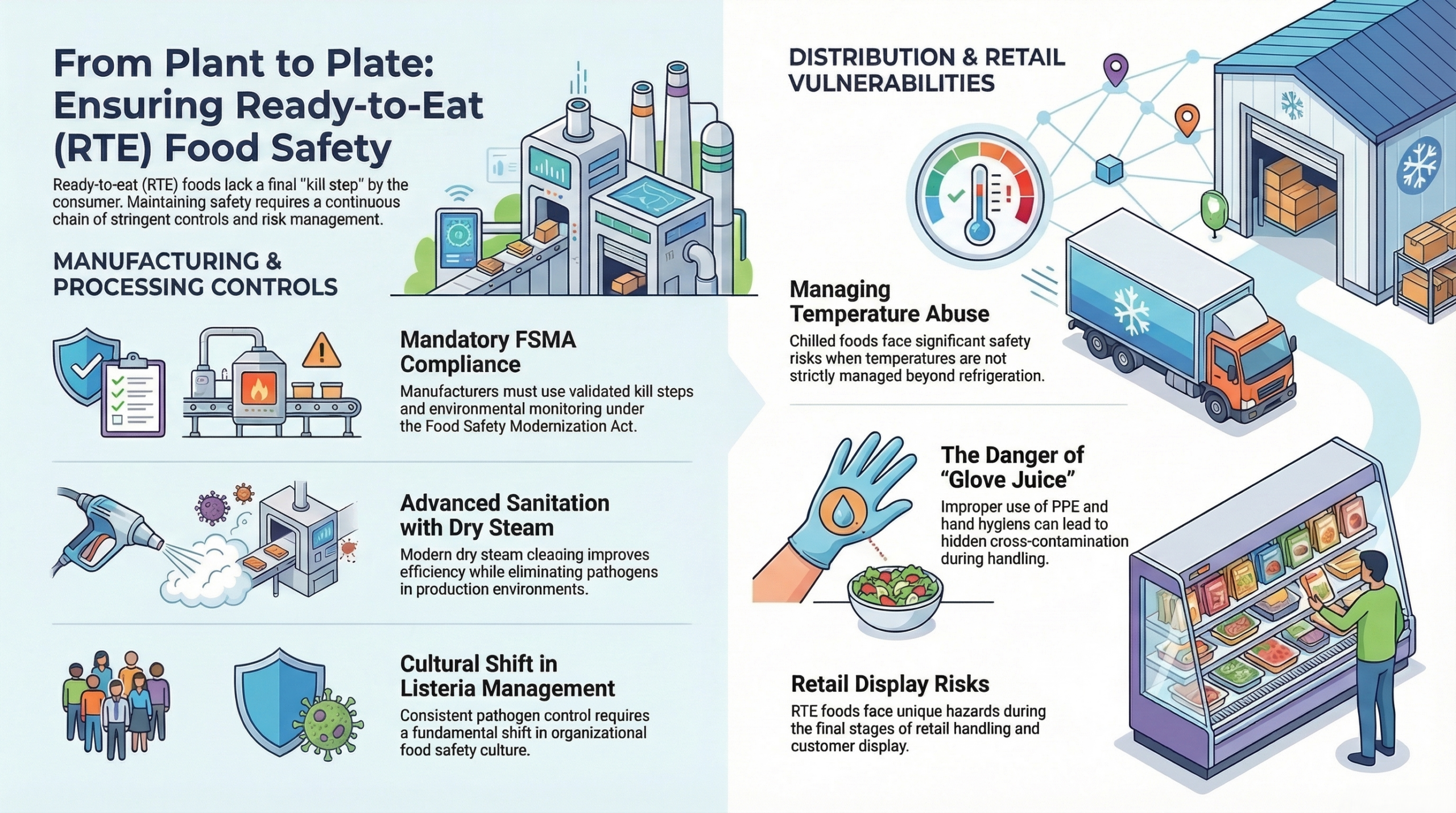
Ready-to-eat (RTE) foods are foods that you can eat directly without cooking or heating, like sandwiches, salads, or packaged snacks. These foods are very common in stores and restaurants because they save time and are convenient.
Because people eat these foods without cooking them, companies that make them must follow very strict food safety rules. These rules come from the Food Safety Modernization Act (FSMA). Manufacturers must make sure harmful germs are destroyed during production, keep the processing areas clean, regularly test the environment for bacteria, and follow safety plans to prevent contamination.
Since consumers do not cook these foods again at home, the responsibility for safety is mainly on the manufacturer and the retailer. From the factory to the store shelf, companies must carefully handle, monitor, and protect ready-to-eat foods to reduce the risk of foodborne illness.
RTE foods are common in modern retail and foodservice because they offer convenience. However, they present a unique challenge because they do not require an additional kill step (like cooking) by the consumer before consumption, making safety during processing and handling critical.
Under the Food Safety Modernization Act (FSMA), manufacturers must adhere to stringent regulations, including validated kill steps, environmental monitoring, and preventive controls to mitigate pathogen risks.
Ensuring safety requires specialized solutions across the entire supply chain, specifically in manufacturing, sanitation, environmental monitoring, distribution, and retail handling.
Modern approaches to efficiency and hygiene include the use of dry steam cleaning in food production environments.
Maintaining safety involves following specific principles of equipment design for RTE operations and implementing “seek and destroy” food safety practices within plants.
Industry organizations like the Food Production Solutions Association (FPSA) and software providers like FoodReady offer tools for traceability, audit preparation, and digitized food safety management.
For more information, please Chat with us Ask The Expert.


Create an account to follow your favorite communities and start taking part in conversations.
Create FSS Account
Login with your credentials and know more about Food safety regulatory compliance
Please enter your registered email address with Food Safety Standard
 Continue with Google
porntude
05:24 PM, Mar 22ndVery good i like it