 Home
Home App Features
 About
About Contact Us
 Legal Compliance
 Food Safety
 News
News Certifications
 Start Up Food
 Business-Type-What am I into ?
 How to Become
 Resource


Welcome
Register with Food safety regulatory compliance


How to determine the shelf life of a ready-to-eat-food?
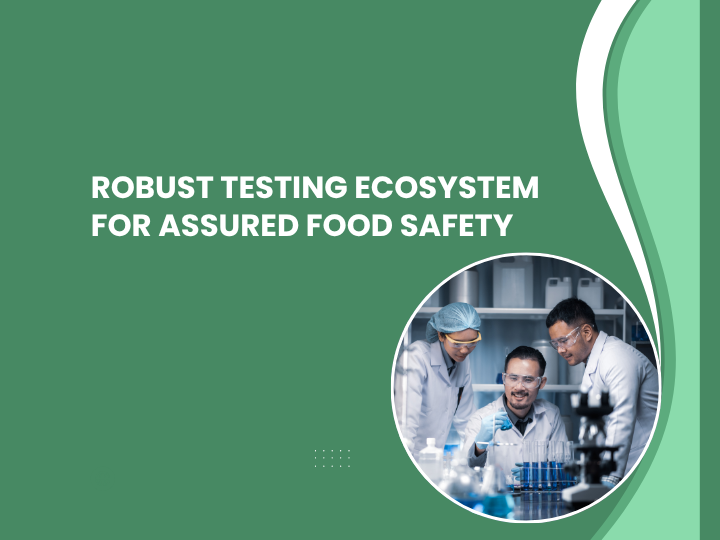
The FSSAI is strengthening India’s national food laboratory network by positioning these facilities as the “heart” of the country’s food safety ecosystem. Recognizing that a robust testing system is critical for public safety, the regulator is taking several specific steps to build a credible foundation for this network:
These improvements to the laboratory system are intended to support increased surveillance and enforcement activities, ensuring that the food available in the marketplace is safe for consumption.
In the food safety ecosystem, private laboratories and businesses (Food Business Operators) act as critical pillars for both regulatory compliance and strategic value creation. Their roles range from providing essential testing infrastructure to implementing comprehensive risk management systems that protect public health and brand integrity.
Private laboratories are increasingly integrated into national food safety frameworks to expand testing capacity and ensure scientific credibility.
Businesses are responsible for the practical execution of safety protocols and are increasingly viewing these duties as strategic investments.
Strengthening India’s national food laboratory network is a critical factor in enhancing the country’s food export potential by building a foundation of credibility and compliance with international standards. According to the sources, these improvements affect export potential in the following ways:
A “credible” national network of food laboratories is described by the FSSAI as the “heart” of a robust food safety ecosystem. For Indian exporters, this infrastructure is essential because international trade regulations often require systematic, auditable testing to prove that products meet the safety requirements of the destination country. Without well-functioning labs to provide this verification, firms face a higher risk of shipment rejections and being excluded from highly regulated markets like the U.S. and Europe.
Robust laboratory testing is often a prerequisite for the certifications (such as HACCP or ISO 22000) required to enter high-value supply chains.
Improved testing capacity allows exporters to identify hazards—such as microbial risks or chemical adulterants—before products leave the country.
A strong laboratory network and the resulting safety certifications signal strong operational control to international buyers and investors. The sources note that across various portfolios, improved food safety practices have been associated with over US$478 million in new sales and significant external investment, as they demonstrate a company’s ability to participate reliably in global supply chains.
The FSSAI’s focus on building the capacity of analytical staff and providing financial support to labs is designed to address the current “initial” state of the system. By increasing the number of samples tested by both enforcement agencies and businesses, India can create a more transparent safety record that satisfies the rigorous audit readiness demanded by foreign buyers.
For more information, please Chat with us Ask The Expert.



Create an account to follow your favorite communities and start taking part in conversations.
Create FSS Account
Login with your credentials and know more about Food safety regulatory compliance
Please enter your registered email address with Food Safety Standard
 Continue with Google
PornTude
04:13 AM, Jun 11thAll the best
333985
12:33 AM, May 15thwish you all the best