This article outlines new requirements for food-service establishments to install CCTV cameras in kitchen and food-handling areas to promote transparency and safety. A live video feed must be displayed in public areas, allowing customers to observe the facility’s hygiene practices in real time. Beyond surveillance, the guidelines emphasize strict adherence to legal sanitation standards, covering essential topics like pest control, waste management, and worker hygiene. Business owners are expected to maintain these high standards continuously to ensure consumer confidence and avoid legal penalties. Failure to comply with these safety regulations can result in formal improvement notices or the cancellation of operating licenses. Overall, the initiative seeks to foster a culture of cleanliness and accountability within the food industry.
Core Objective & Vision:
- Promoting Transparency: The advisory aims to foster a culture of “Clean Kitchen – Safe Food – Transparent Food Business”, motivating food service establishments to maintain hygiene standards continuously rather than only during official inspections.
- Building Consumer Confidence: Displaying live food preparation enables customers to observe hygiene and food-handling practices first hand, enhancing trust and transparency.
Live CCTV Feed & Operational Requirements:
- Mandatory Camera Coverage: CCTV cameras must be installed to cover all critical food-handling areas, including food preparation/kitchen areas, cooking zones, washing/cleaning stations, and other key handling points.
- Unobstructed Views: Camera positions must not be blocked or deliberately angled to defeat monitoring.
- Live Display Monitor: A display monitor showing the live CCTV feed must be placed in a clearly visible location near the reception, entrance, or customer seating area.
- Operating Hours & Recording Retention: Systems must remain operational throughout business hours. Video recordings must be retained for a reasonable period and provided to competent authorities for inspections or enforcement proceedings upon request.
- Privacy Controls: Cameras must focus exclusively on food-safety operations and must not intrude into private areas such as washrooms or changing rooms.
Key Food Safety & Hygiene Requirements (Schedule 4 Compliance):
All restaurants and food-service establishments must comply strictly with the Food Safety and Standards Act, 2006 and the 2011 Licensing and Registration Regulations, including Schedule 4 sanitary practices and maintaining a documented Food Safety Management System (FSMS).
Essential requirements include:
- Kitchen Cleanliness: Maintaining clean and hygienic floors, walls, ceilings, work surfaces, utensils, and equipment.
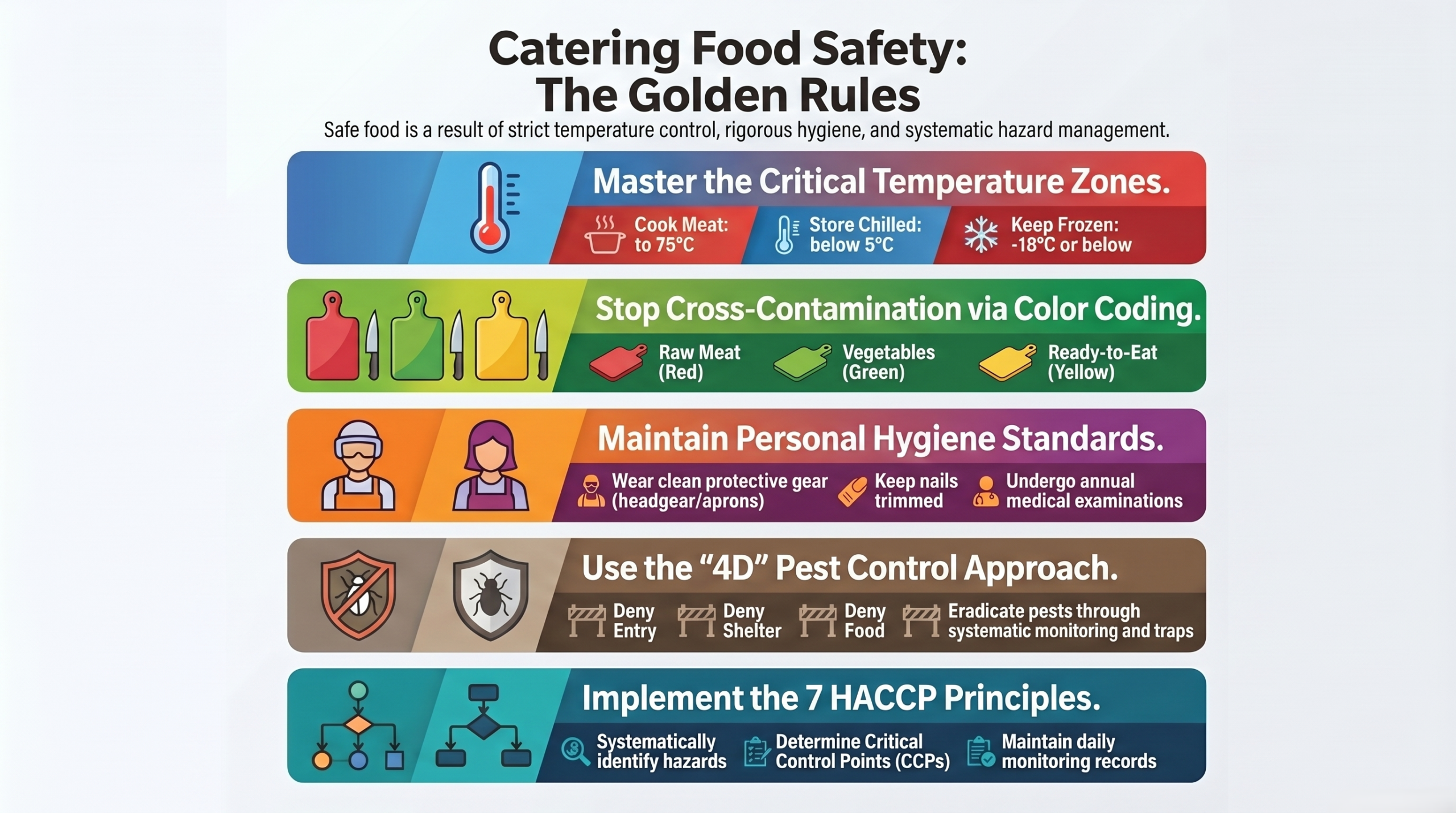
- Personal Hygiene & Training: Food handlers must maintain personal hygiene, wear clean protective aprons/clothing, practice proper hand hygiene, and receive food safety training while management maintains official records.
- Cross-Contamination Prevention: Properly segregating raw, cooked, and ready-to-eat foods during handling and storage.
- Food Storage & Protection: Safely storing and covering food to protect it from dust, insects, and handling contamination.
- Safe Water Supply: Ensuring all water used for food preparation and cleaning meets applicable safety standards.
- Pest Control: Implementing effective pest prevention measures against insects, rodents, and other pests.
- Waste Management: Disposing of food waste promptly in covered bins to prevent accumulation in food preparation areas.
- Cleaning & Sanitisation: Sanitising food-contact surfaces, equipment, and kitchen areas at appropriate intervals.
- Safe Cooking Practices: Adequately cooking food and protecting it throughout preparation, storage, and service.
- Oil Management: Preventing repeated use of cooking oil beyond permissible limits and maintaining disposal records where applicable.
- Permitted Ingredients: Using only FSSAI-compliant food additives, colours, and ingredients.
Regulatory Enforcement & Penalties:
- Legal Liability: Failure to meet statutory hygiene and food safety rules can lead to enforcement action under the Food Safety and Standards Act, 2006.
- Section 32 Improvement Notices: Authorities may conduct inspections and issue an Improvement Notice under Section 32, mandating corrective measures within a set timeframe.
- Licence Suspension or Cancellation: Continued non-compliance or failure to obey an Improvement Notice can result in the suspension or cancellation of the food licence along with other penal actions.
- Utmost Priority: Establishments are directed to treat these requirements with the highest priority.
For more information, please Chat with us Ask The Expert.
 Home
Home App Features
 About
About Contact Us
 Legal Compliance
 Food Safety
 News
News Certifications
 Start Up Food
 Business-Type-What am I into ?
 How to Become
 Resource






 Continue with Google
No comments