The following are the key points from the general requirements on hygienic and sanitary practices for Food Business Operators (FBOs), as detailed in the sources:
Premises and Facility Design:
- Location and Surroundings: Food establishments should be located away from environmental pollution, industrial activities, and areas prone to pest infestations. Manufacturing premises must not have direct access to residential areas.
- Layout and Surfaces: The layout must prevent cross-contamination between pre-processing and post-manufacturing operations. Floors, walls, and ceilings must be made of smooth, impervious, and easy-to-clean materials to minimize dirt accumulation and mold growth.
- Drainage and Waste: Processing areas require adequate drainage that flows in the opposite direction of the food production flow. Waste must be stored in covered containers, removed periodically, and disposed of according to local environmental regulations.
- Ventilation and Lighting: Ventilation systems must ensure air does not flow from contaminated areas to clean ones. Adequate natural or artificial lighting must be provided, with fixtures protected to prevent food contamination from breakages.
Equipment and Water Standards:
- Equipment Quality: All containers and equipment in contact with food must be non-toxic, corrosion-free, and easy to disinfect. Stainless steel, aluminum, or glass are preferred materials, while chipped enamel is strictly prohibited.
- Water Supply: Only potable water can be used as an ingredient or for food handling and washing. Water storage tanks must be cleaned periodically, with records maintained in a register. If non-potable water is used for cleaning external equipment or fire-fighting, its pipes must be clearly distinguished and separate from potable water lines.
Food Operations and Storage:
- Raw Material Procurement: Ingredients must be checked for parasites, micro-organisms, or toxins and must conform to all legal regulations. Packaged materials must be inspected for ‘expiry’ or ‘best before’ dates.
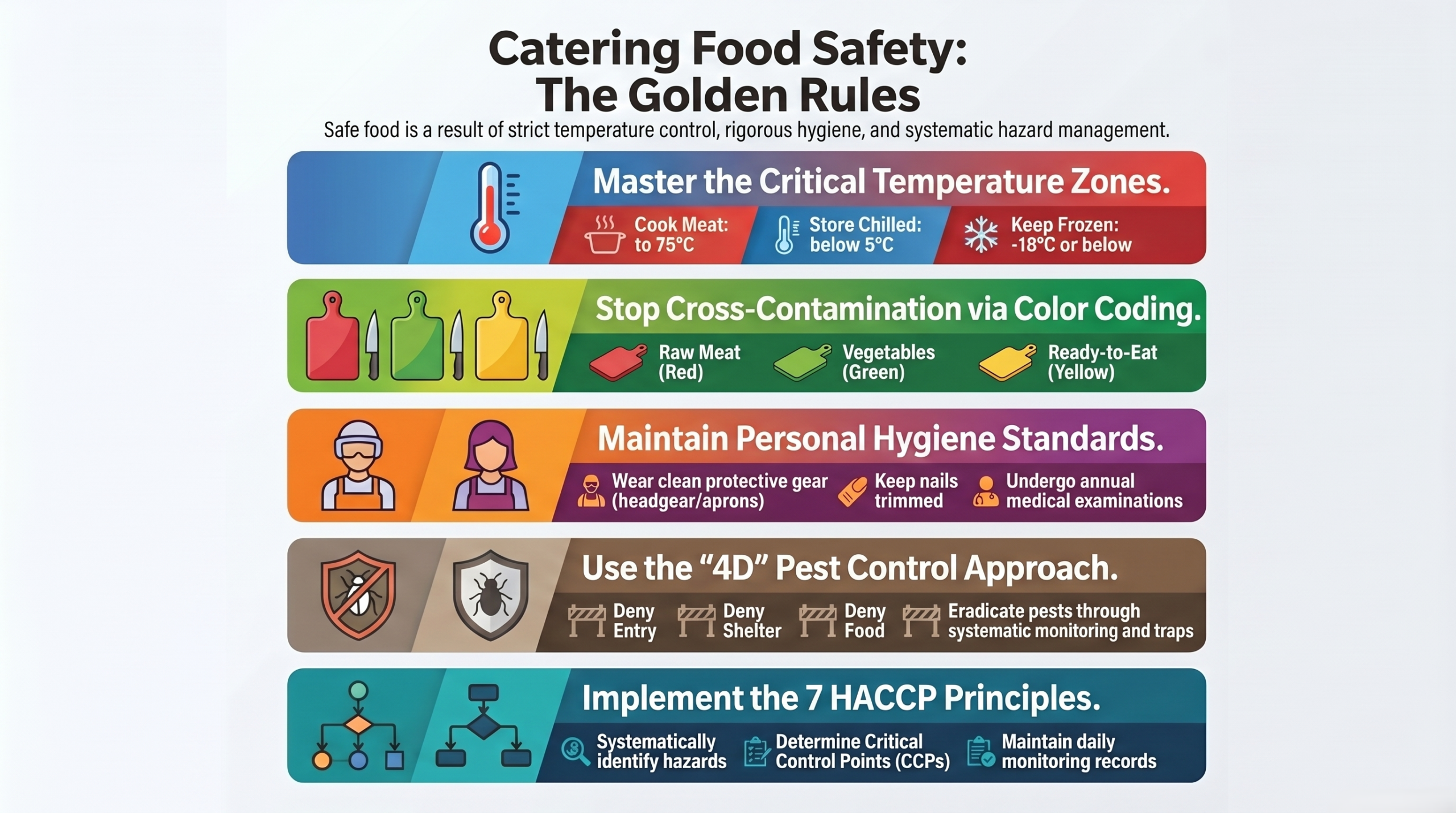
- Temperature Control: High-risk foods must be received at or below 5°C, and frozen foods at or below -18°C. Establishments must maintain effective time and temperature controls during receiving, cooking, cooling, and distribution.
- Storage Practices: Raw food, especially meat and seafood, must be stored separately from processed or packaged products. FBOs must follow FIFO (First In, First Out) or FEFO (First Expire, First Out) stock rotation systems.
Personnel Hygiene and Training:
- Health Status: Food handlers must undergo medical examinations at least once a year and be inoculated against enteric diseases. Anyone suffering from an illness likely to be transmitted through food must be barred from food handling areas.
- Personal Cleanliness: Handlers must maintain high standards of cleanliness, wearing protective clothing, head coverings, and gloves. They must refrain from unhygienic habits such as smoking, spitting, or eating in preparation areas.
- Training: All food handlers must be trained in food hygiene and safety principles relative to their specific roles, with regular assessments of their competency.
Management and Quality Control:
- SOPs and Supervision: FBOs must develop detailed Standard Operating Procedures (SOPs) for processing, packing, and storage. Technical managers and supervisors must possess appropriate knowledge to judge hazards and take corrective actions.
- Testing and Records: Establishments should have an in-house laboratory or use an FSSAI-notified accredited lab for periodic testing. Detailed records of production, quality tests, cleaning, and pest control must be retained for at least one year or the product’s shelf-life.
Download, Read & Share:
- General Requirements on Hygienic and Sanitary Practices
For more information, please Chat with us Ask The Expert.
Resources
General Requirements on Hygienic and Sanitary Practices
 Home
Home App Features
 About
About Contact Us
 Legal Compliance
 Food Safety
 News
News Certifications
 Start Up Food
 Business-Type-What am I into ?
 How to Become
 Resource



 Continue with Google
No comments