 Home
Home App Features
 About
About Contact Us
 Legal Compliance
 Food Safety
 News
News Certifications
 Start Up Food
 Business-Type-What am I into ?
 How to Become
 Resource



Welcome
Register with Food safety regulatory compliance


How to determine the shelf life of a ready-to-eat-food?
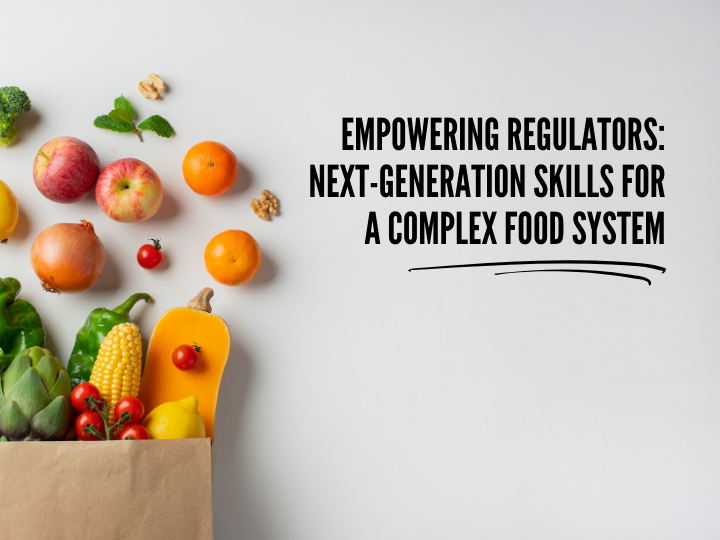
The global food system is evolving rapidly due to complex international supply chains, the emergence of novel foods (e.g., plant-based, cultured meat), increased consumer demand for transparency, and advancements in technology. Food regulators face the challenge of ensuring safety, trust and innovation in this dynamic environment.
However, current skill gaps in areas such as digital tools, risk communication, fraud detection, and global regulatory alignment hinder effective oversight. There is a critical need to empower regulators through competency-based training and modern tools to address food safety challenges and foster public trust. Communication strategies must also evolve, integrating digital platforms, social media, and data visualization, to deliver timely, science-based messaging and enhance global collaboration.
Next-generation skills for a complex food system emphasize digital proficiency, sustainability expertise, and adaptive risk management to handle global supply chains, emerging technologies, and environmental challenges. These skills prepare regulators, farmers, and professionals for “twin transitions” in green and digital innovation.
Digital and data analytics skills, including AI tools, predictive modeling, and big data handling from inspections and trade, enable proactive food safety measures. Scientific risk assessment competencies cover exposure analysis, toxicology, and nutrition science for novel foods and processing methods. Advanced technologies like blockchain, IoT, and genomics strengthen value chain oversight.
In the agri-food sector, upskilling targets automation, biotechnology for resilient crops, and sustainable digitalization to close skills gaps. Initiatives like the EU’s Union of Skills and TWIN IN project develop curricula for farmers, focusing on lifelong learning and adult education. CEDEFOP tools highlight rising demand for AI-related training in manual jobs.
Regulators need multi-channel approaches, such as social media dashboards, real-time alerts, and data visualization, to build trust and share science-based messaging. Inter-agency collaboration across authorities enhances enforcement in complex systems.
Competency-based training frameworks align with Codex standards, harmonizing approaches for fair trade and innovation while addressing geopolitical and supply chain uncertainties. Systems thinking fosters resilience through scenario planning and cross-sector stakeholder engagement.
This session will explore how to build future-ready capabilities among food regulators by identifying core skill areas, technology adoption, and collaboration strategies. The focus will include:
Technology Integration: Leveraging AI, blockchain, genomics, and IoT to modernize regulatory functions.
Skill Development: Enhancing scientific risk assessment, digital analytics, traceability, fraud detection, and regulatory leadership.
Communication Strategy: Utilizing social media, mobile apps, dashboards, and risk communication principles for effective consumer engagement.
Global Harmonization: Aligning regulatory practices with Codex and WTO-SPS measures, while respecting regional food cultures and practices.
Collaboration Networks: Establishing international training and knowledge-sharing platforms to unify efforts and build trust across borders.
A clear understanding of regulatory challenges and skill gaps.
A competency framework to guide global training initiatives.
Actionable insights into the role of emerging technologies in food safety.
Modern Communication tools for consumer trust and crisis management.
Best practices for digital and multi-stakeholder communication.
Recommendations for building a harmonized, tech-enabled, and trust-driven food regulatory system.
For more information, please Chat with us Ask The Expert.


Create an account to follow your favorite communities and start taking part in conversations.
Create FSS Account
Login with your credentials and know more about Food safety regulatory compliance
Please enter your registered email address with Food Safety Standard
 Continue with Google
No comments