 Home
Home App Features
 About
About Contact Us
 Legal Compliance
 Food Safety
 News
News Certifications
 Start Up Food
 Business-Type-What am I into ?
 How to Become
 Resource


Welcome
Register with Food safety regulatory compliance


How to determine the shelf life of a ready-to-eat-food?
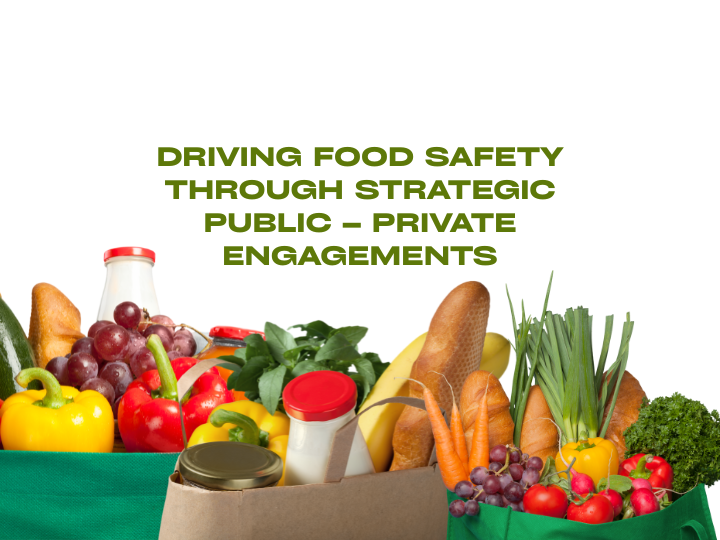
Food safety is a global priority requiring collaboration across regulators, industry, academia, and civil society. Public-Private Partnerships (PPPs) are pivotal in addressing food safety by combining government initiatives with private sector innovation. These collaborations foster resilient, sustainable food systems through shared responsibility, driving innovation, compliance, and awareness to mitigate Antimicrobial Resistance (AMR) and enhance food safety. PPPs have proven effective in developing science-based standards through risk assessment. Small and medium food businesses (SMFBs) especially benefit from PPP-led initiatives through access to technology, compliance support, and capacity building. PPPs can address AMR risks, build resilience against global crises, and enhance supply chain transparency and trust.
Collaborative Governance: Develop models for public-private collaboration to address food safety and AMR, ensuring accountability and transparent regulations.
Standards and Compliance: Partner with industry to set science-based standards and industry-led frameworks for responsible food safety compliance.
Research and Innovation: Promote joint R&D to generate data for risk assessment for AMR surveillance and food safety monitoring. Examine PPP-driven research in antibiotic alternatives, veterinary practices, and AMR surveillance.
Capacity Building: Explore PPP support for small and medium food businesses (SMFBs) in compliance, technology adoption, and training related to Good Manufacturing Practices (GMP) and
Good Hygienic Practices (GHPs).
Public Awareness: Leverage campaigns like Eat Right India and Corporate Social Responsibility (CSR) initiatives to raise consumer awareness about AMR risks and safe food choices.
Crisis management: Discuss PPPs in strengthening supply chains, develop roadmap and crisis management. Developing protocols for public-private response to food safety incidents, ensuring rapid communication, coordinated recalls, and effective public messaging.
Structured Frameworks & Governance: Robust PPP models and streamlined standards to strengthen food safety and ensure compliance.
Stakeholder Collaboration: Stronger public–private trust, partnerships, and shared investments for effective implementation.
Policy Inputs: Recommendations on AMR reduction, sustainable animal husbandry, and responsible veterinary practices.
Supply Chain Resilience: Tools for risk management, traceability, and crisis preparedness.
Capacity Building: Certified and trained workforce of food business operators in AMR mitigation and hygiene practices.
Enhanced Surveillance: Strong AMR and food safety monitoring systems integrated with national and global frameworks.
Consumer Empowerment: Increased public awareness to drive responsible choices and healthier diets.
Scalable PPP Models: Repository of best practices and strategies to empower small and medium food businesses, ensuring long-term sustainability.
Interest in public-private sector collaboration is growing, as governments search for alternative and innovative solutions to enhance their food control system, and small and medium-size enterprises seek new markets in the high-value domestic retail sector, locally, regionally, and globally.
Promotes the engagement of private sector actors in local, regional, and global partnerships and advances multistakeholder food safety dialogues and interventions.
There are different types of PPPs to improve food safety capacity and compliance, involving diverse stakeholders. While some of these partnerships focus on dialogue and information exchange, others go much further to develop and roll out a collaborative approach to the planning and implementation of food safety controls, accompanied by new legal and/or financing arrangements. While it often takes considerable time and effort to develop and sustain these partnerships, experience points to the value and rewards.
Successful public–private partnerships (PPPs) in food safety depend on more than good intentions. They require clear structures, trust, and sustained commitment from all partners. Key elements include:
Together, these elements enable PPPs to move from short-term collaboration to lasting impact, strengthening food safety systems and protecting public health.
Here is a clear, structured overview you can use for a paper, presentation, or policy brief on public–private collaboration in regulatory practices, especially relevant to food safety and other regulated sectors.
Drivers of Public–Private Collaboration on Regulatory Practices:
Benefits of Public–Private Collaboration:
Challenges of Public–Private Collaboration:
For more information, please Chat with us Ask The Expert.


Create an account to follow your favorite communities and start taking part in conversations.
Create FSS Account
Login with your credentials and know more about Food safety regulatory compliance
Please enter your registered email address with Food Safety Standard
 Continue with Google
No comments